

Serving – Humility at the start of the game
Why must the serve be underhand?
The padel serve differs significantly from tennis: the ball must first be bounced on the ground, then struck at or below waist height. This rule levels the playing field and prevents the serve from becoming an excessive advantage. The powerful, overhead serves seen in tennis are not allowed here. This rule reinforces the sport's democratic character: padel is not about power, but about technique and tactics. The underhand serve also has historical roots: padel originally started as a social sport, where the goal was not for one player to dominate the other, but to play long, enjoyable rallies.
The underhand serve also requires different technical skills: precision and hitting the right direction and height are essential. Professional players are able to add various effects (spin, slice) to the serve, which makes returning more difficult. Interestingly, while in tennis the serve generally provides an advantage, in padel the receiving team is often in a more favorable position, since the serve cannot be as aggressive.
The path of the serve
The ball must be struck so that it arrives diagonally in the opponent's service box. After bouncing, the ball may touch both the back and side glass walls. This rule allows for exciting variations right from the start of the game. During the serve, the player must stand behind the center line, between the imaginary extended service line and the side wall. The ball must first bounce on the player's own side of the ground, not too far from the player's foot, then fly diagonally over the net into the opponent's service box. The height of the serve is also important: it cannot be too high (this would make returning easy), but it can't be too low either (because then it would hit the net).
Professional players generally attempt low, fast serves that bounce close to the receiving player's back wall, making accurate returns difficult.
There are also different types of serves: the "plano" (flat), the "cortado" (sliced), and the "liftado" (topspin), each with different bounce characteristics, which can be effective in different situations.
Receiving the serve
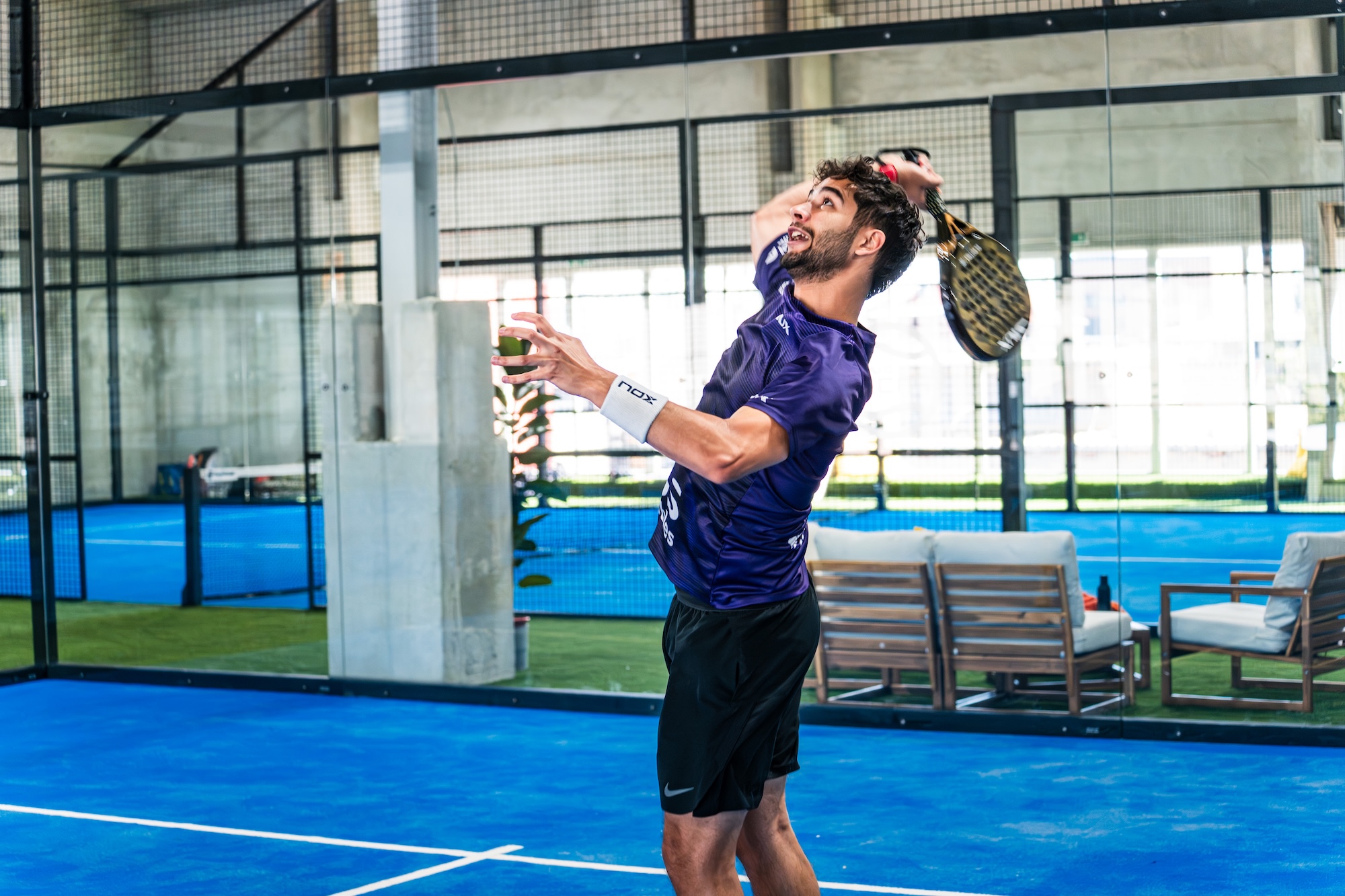
The opponent may return the ball both before and after it touches the wall, but the serve cannot be returned with a volley. This rule prevents scoring points too quickly and gives the game a chance to develop. The receiving player must wait for the ball to bounce on the ground before returning it. This rule makes the game more balanced and results in longer rallies. The receiving position is critical: the receiving player must stand close enough to react to fast serves, but far enough to allow themselves time to handle the ball rebounding off the wall.
The receiving technique is also specialized: players generally respond with low, controlled shots, the goal of which is not necessarily to win the point immediately, but to set up a favorable position for continuing the rally.
Professional players often use "bandeja" (tray) or "vibora" (snake) shots when receiving, which send the ball back along a path that's difficult to predict. Teamwork is also important when receiving the serve: while one player receives the serve, their partner is already positioning themselves for the next shot.